Tuesday, 24 November 2009

Hyper Reality lesson

Baudrillard.

- Hard to disgunguish reality from Media reality.
e.g. 9/11 when you think of it, you think of the media images.

Image consumed event
- Absorbs the event and offers it for the consumption of the audience.

Technocracy - Technology ruling instead of humans (Democracy)

Jameson - "Postmodernism is the inevitable state of late capitalism" (all about the individual)

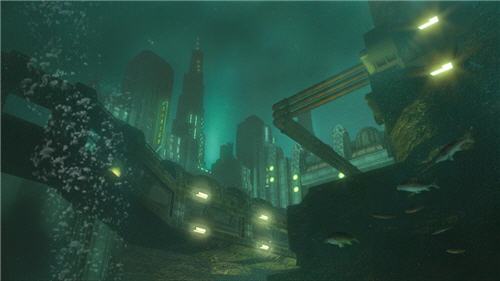
Dystopian (Oposite of Utopian)
Utopia
Dystopia

Thursday, 19 November 2009

Random Key words.

Ideology - The idea of perfection within a group or persons mind
Connote - A link that the audience interprates themselves, more general than...
Denote - A direct link from the object/image.
Semiotics - Signs and meanings within society
Stereotype - Expected characteristics and type-casting
Hegemony - "
A concept from Gramsci suggesting that power is achieved by dominant groups through successful struggles to persuade the subordinate that arrangements are in their interest. Using cultural power to maintain the status quo." (from http://www.heanorgate.org.uk/visualarts.asp?pageID=MediaKeywords)
Pluralistic - General and equal ownership, no particular leaders. e.g. Youtube
User Generated Content - Content added by users e.g. youtube
Iconic - Someone or something that has become an icon e.g. Martin Luther King.
Diagetic - Natural sound e.g. someones boots clicking as they walk along.
Non-Diagetic - Non-natural sound, e.g. music over the top of a scene
Moral Panic - Where a certain group or movement is over-covered and exadurated by the media, causing irrational fear.
Folk-Devils - Scapegoats
Verisimilitude - The closeness to reality of a text (remember by VerySimilarTo)
Overarching Morals - The main beleifs and social rules of a group or society
Meta/Grand narrative - A generally accepted way of life working, for example in England, education and healthcare.

Michael Winterbottom Films.

I studied two very different pieces; 24 Hour Party People and Genova.
24 Hour Party People is about the development of the music culture in Manchester with narration from a music manager. A very post modern piece, due to several factors which I will go on to explain.

Genova is a film about greiving and the loss of someone important in your life. There is no narrator or particular main character as it follows two daughters and their father through a new life in Italy after their mothers death. The story dosen't have a plot realy but is more about the greivence prosess and the meta-narrative of family values.

Work in progress, need to find my notes, which are currently downstairs.
24 Hour Party People.
- Breaks fourth wall
- Talks about being post modern within the film
- Intertextual, has TV, Music
- Refers to other texts
- Nihilistic plot - does not just stick to it e.g. pigeons dieing scene (random)


Genova.
- Stedicam style camera work
- No real plot
- Hyper reality

Stedicam style and Postmodernism.

Here for usefull source: http://en.wikipedia.org/wiki/Steadicam

The stedi-cam style of filming can be considered post modern due to the fact it is self referencial, refering back to the audience, who can easily relate to the hand-held camera style. As well as video texts using the Stedi-cam becoming hyper real, allowing the audience to gain a more personal viewpoint of the scene, for example in Genova where the camera is often folowing action, rather than the action fitting into the frame, much more like reality. Your eye follows action rather than visa versa.

Wednesday, 4 November 2009

Media Essay. How do Moral Panics form a Fragment of Cultural Identity?

How do Moral Panics form a Fragment of Cultural Identity?

I feel that cultural identity is basically just the same as a collective identity within boundaries of generation and location. I also feel that moral panics are situations that the media blow out of proportion.

Fragments of cultural identities are small parts of a collective identity that have fragmented off from the rest of society usually because of more extremist viewpoints. For example the Nazis started off as a fragment group of socialism because of their extreme views which where too extreme for most allthough over time people grew to support it due to their frustration at the state of government at the time, this shows that even fragment groups can grow to become generally accepted. Fragment groups in the sense of the media are most likely people who are within different classes, genders, ethnicities and ages than the target audiences of specific texts. For example someone who is not middle classed and educated reading the 'Guardian'. They could then be a fragment group of their typical sect in society if they where to be untypical the would simply become fragments of a larger, or parent group. These are usually called "splinter groups". These groups consist of the same overarching moral agenda as the parent group but have a different, usually contrasting, veiwpoint on one or several of the parent group's beleifs. These can be created in the context of moral panics.

For a moral panic to happen you need an emergance of some behaviour and then an irrational fear of the certain behaviour catalysed by the media. This can happen with statistics. For example, "75 women raped by plumbers". This phrase does not mention over what time period this has happened, it could be over 400 years for all we know but never the less, some of the audience will take this as the hypodermic needle model suggests, without any real thought or external input. These members of the audience will form a collective identity who dislike and judge the moral agenda of a general group of people, the plumbers.


In terms of a real scenario; the rave culture hype. A relatively harmless movement of youth, where they had an anarchic, unlawfull and pluralistic style of rule, with no real heads and secret meeting places. It provided the three main missgivings for it to become a moral panic; "drugs, sex and pleasure". People became so worried about it several acts where passed so that the raves had to be stopped. For these conclusions to occur there needs to be

In conclusion, moral panics form a fragment of cultural identity by making the problem seem much worse than it actually is and then different people from the same cultural identity disagree on certain factors of the 'panic'.

Post Modernism.

x Self referential (such as breaking the fourth wall, talking about the sponsors negitively as a joke)
x Rejection of conventions. No central values
x Death of the author.

Parody - A direct piss take with a few people and 1-2 texts
Irony - Humurous juxtapositions (e.g. a lazy person saying someone else is lazy)
Pastiche - A montage of genres mimiced (e.g. Scary Movie)
Eclectic - Blend of things that usually do not go. (Genres etc.)
Playfull - Do not take themselves, or the audience seriously. (e.g. Team America)
Aesthetic - The way things look
Intertextual - Referencing other texts (e.g. Spaced)
Nihilism - No faith, pesimistic.
Self Referential - Refer to themselves in texts (e.g. The Simpsons)
Hyper Reality - More than real, exadurated reality (e.g. Malcolm in the Middle)

Wednesday, 21 October 2009

The Boat that Rocked Homework.

To what extent is the film based on real events?
There where real Pirate Radios on ships.
There was not a real ship called "Radio Rock" - I feel they made up this name because it goes with the title - "The Boat that Rocked" which has the double meaning of rocking in the musical, 'cool' terms and rocking, as a boat does in the sea.
The Government at the time was labour, not conservative - They most likely made this up so as to make it much easier for them to get the audience to react negatively towards the "evil" character. They made him very stereotyped so him being conservative came naturally.
The boat that rocked station is most likely based on the legendary Radio Caroline. A real, and most successful pirate radio station which is still on air today.
The fact that it is still on air suggests that the boat did not sink. I feel that the sinking boat was added so that the characters could each go their own ways, onto the different boats without making that decision themselves. It means that the audience gets an insight into the futures of the characters simultaneously and without a feeling of them leaving the "rocking" lifestyle.
The 45 minutes a day on BBC I am not sure is true or false. But there was a foreign radio station that was very popular, Radio Luxembourg. The founder of Radio Caroline, who helpped the Rolling Stones, wanted to get them aired. But Radio Luxembourg was filled with major record label music. So the founder of Radio Caroline (Ronan O'Rahilly) wanted to found a radio station whereby indipendant and smaller groups could gain air time.
The class of the people onboard the ship is accurate however. Ronan O'Rahilly was a well off man and lived in relative luxury. This was kept accurate due to the easyness on the eye and brain for the ship to be relatively well looked after and luxurious. This keeps the audience's attention on the goings on of the characters rather than their living conditions. This goes along with the positive, upbeat and 'feel-good' nature of the plot. It also helps create nice, cosy mis-en-scenes.
It is also true that there was American influenced radio stations. This was kept the same since it helps the verisimilitude as well as satisfying American audiences.
Again it is true that there was a massive audience listening to these pirate radios, over a third of the British population.
The Broadcasting Offences act was true and it did become law at a midnight. This allowed for the rather symbolic ending of broadcasting


Things that where kept out:
Major Oliver Smedley hijacked Calvert's fort. In a fit of fury Calvert, who was known to be a violent and irrational person, burst into Smedley's home and hurled a heavy stone ornament at him. He also claimed to be armed with a tear gas pistol. Smedley took up his shot gun and killed Calvert. The image of the offshore stations as jolly buccaneers using spare radio channels to provide popular free entertainment was irrevocably shattered. Now the government could portray them as battling, murdering gangsters.
This was kept out because it was far too brutal and down to earth for this film. Also as it says in this extract the fun loving, jolly buccaneer attitude of the DJ's would have been ruined.

Source:
http://www.radiocaroline.co.uk/#history_part_1.html