Media texts representing reality in this media saturated world are blurring the line between reality and media reality. The modern period has gone. This modern period is where artists experiemented with reality and brought forward ideas of pastiche, parody and intertextuality. It has even become reasonable to make it obvious how something was produced, as if you can see the bones and structure of its creation. It has also been claimed "post modernism" is just a new way of interpreting the media.
Basic Values:
- All media texts are of equal value and only personal preference can change this.
- Media is just reproducing itself, mixing things up in a new order rather than creating something from scratch. (such as "fasion" today, 60's style household items are back in "fasion")
- Reality is defined by images and representations - Simulacrum
- "Truth" is just the accepted discourse
Post modernist texts set out to purposefully play with reality in the PAINPIPESH way. As well as representing media-reality's representations.
Grand narratives need to be de-constructed. No reconstruction can ever be an accurate representation. It is expected that richer nations with time to dwell on cultural matters would have a naturally playful viewpoint on these grand narratives.
Hyperreality
There is no longer any origional thing. Pure reality is replaced by imagination. The boundary between imaginary and reality is blurred creating hyperreality.
To be continued.
Events such as the Gulf war and 9/11 where only exprerienced by many, through the media, and is not a real event for them even though it may seem so. They could be purely media events. "The Gulf war never happened".
Style, with Bladerunner in mind:
- Mixing textual and image references.
- Juxtaposition of times, film noir voice over, futuristic setting (re-use)
Reception:
- Post modern city
- Robot and Human distinction unclear
- Virtual equivalent more attractive
- Can humanity be manufactured?
Subject matter:
- Time/lack of
- World is constructed through a set of binary oppositions
Postmodern Auters: Michael Winterbottom, the Coens and Wong Kar-wai.
Directors and films are often labeled as postmodern.
Winterbottom can also be studied for "media and collective identity". His films often represent changing Britain. His films share an interest in blurring boundaries between reality and media reality. Or fictional events and real events. Winterbottom has characters face the camera and break the 4th wall. They also say things that mock postmodernism itself. Such as in 24 hour party people where the protagnist directly reffers to post modernism saying something loosely like "see you know I'm flirting with you, and I know you know it, and I know I'm flirting with you so I'm being postmodern". Even thought Winterbottom is mocking post-modernism he is still keeping firmly within post-modernism's playfull/mocking nature. There is also a large disregard for realist conventions. "The making of.." style of A Cock and Bull Story also brings in postmodernism since you can actually see the construction of the media reality, again blurring the boundaries.
Auter suggests we think of the films as the products of the individual creators. The Coen Brothers have created a body of work that consistently displays postmodern characteristics. "The Coens are clever directors who know too much about movies and too little about real life" (Levy 1999, in Coughlin 2003: 3)
Intertextuality is often used by the Coens. Intertextuality is often used because an audience cannot help but to refer to other texts that they have allready experienced when experiencing a new one. Reaction against classic genres. Turnning over and examination of genre stereotypes and conventions. The things that people celebrate in the Coen brothers may also be critisized.
Wong Kar-wai. His films mostly take place in Hong-Kong which some people argue is in itself a post modern space due to its status of being perpetually caught between traditional and modern. His characters are often lonlely even in this over-populated area of the world. He manipulates time and space in unusual ways around the characters so they interlink without necesarily knowing. One of the characters is associated with a song, sometimes it is diagetic and she is interacting with it and sometimes it is non-diagetic and it can often be unclear which it is.
DJ Shadow - Endtroducing.
An album made up completely of pre-recorded songs mixed together. The music genres are so mixed and diverse that the album or songs themselves do not have a specific genre so often just become "postmodern".
Postmodern TV
As TV ages the distinction between real personalities and TV personalities blurs. TV and the internet have also largely converged with catchup sights and characters using internet during programes. The Mighty Boosh is definately postmodern. Even the introduction is physically intertextual. Even one of the main characters is highly intertextual with references to punk culture with his jacket and belt and a mullet/big hair style refering to the 80s. There is a bricolage (remixing of existing formulas).
The Wire has had five series each of which explores a different theme usually based on the corruption and exploitation across organisations. The first series represents a family of drug dealers, the next about a group of sex workers who are murdered.
Potmodern soap operas.
Postmodernism is no longer an obscure theory but it has become the mainstream. Or even how postmodern the mainstream has become. Soap has been post modern for a long time. The Tabloids treat characters as if they're real, some of the public send them birthday cards and you can research extra details on the characters that aren't necesary to the plot.
The Cadbury Gorrilla shows an apparent massive departure from advertising the product itself. Whereas actually it offers a direct connection to the appeal of the product. A guilty pleasure, a secret enjoyment. A "primal instict" despite the popular culture of healthy food. It alloud people to make a subcontious connection to the gorrila and the product.
Readers can pick and mix what they excperience espescially when it comes to magazines.
A personal favorite of mine, GTA IV. Within the game there is much intertextuality as well as the graphics being as close to reality as possible. Also it takes place within New York and is therefore a virtual representation of a physical space. There is a lot of playfullness too with characters walking the streets of GTA having individual come-backs and apperances, humerous posters and (famous in the GTA series) hidden easter eggs. One easter egg being a sign that says "no easter eggs here" the ultimate post-modernist statement.
Second life, a virtual world in which you can become your ideal avatar, and talk to people from all over the world. It is not a game as such. There are no "objectives". Both GTAIV and SL offer the player the option just to be, rather than do.
Saturday, 16 January 2010

Sunday, 6 December 2009
How and why postmodern media plays with the verisimilitude of a text.
Postmodern media is a fairly newly named style of media in which the media plays with the audience's interpretation of reality and over-arching morals. It has an anti-foundationalist attitude which feel the need to deconstruct every myth and accepted modern standard. Every kind of media text can be explained as post modern if you are to look deeply enough into them but I feel that the Internet, some kind of Art and Film are the most experimental platforms with this style of media.
Verisimilitude is how close to reality the representation is to the real self. For example in art, a realist painting, such as Manet's Olympia would have more verisimilitude than an abstract peice of art such as Picasso's Weeping Woman because it is a closer representation of reality. Media text often try to get so close to reality that they make things over-real. This i called Hyper-reality. This is excelently demonstrated in the Hudsucker Proxxy by the Coen Brothers in which the film is set more in a film-reality than in verisimilitude. For example the imagary within The Hudsucker Proxxy is very much ideolised to be like the 1950's posters. Not like the 1950's reality. This supports Baudrillard's theory that reality can no longer be seperated from media reality.
Chandlers model suggets that the audience only sees the reality through the production. The representation of reality can be called simulacrum. The simulacrum mutually relies on the audience to understand what it is simulating. So allready reality is interpreted through a pre-existing interpretation. Post modernism is just playing whith this pre-interpreted past and media reality by replacing it with it's own, ironic and playfull reality. I feel that post modern texts ask for the audience to make their mind up on what they feel is reality themselves, interprate things in a new light, with their own eyes and mind.
Verisimilitude is how close to reality the representation is to the real self. For example in art, a realist painting, such as Manet's Olympia would have more verisimilitude than an abstract peice of art such as Picasso's Weeping Woman because it is a closer representation of reality. Media text often try to get so close to reality that they make things over-real. This i called Hyper-reality. This is excelently demonstrated in the Hudsucker Proxxy by the Coen Brothers in which the film is set more in a film-reality than in verisimilitude. For example the imagary within The Hudsucker Proxxy is very much ideolised to be like the 1950's posters. Not like the 1950's reality. This supports Baudrillard's theory that reality can no longer be seperated from media reality.
Chandlers model suggets that the audience only sees the reality through the production. The representation of reality can be called simulacrum. The simulacrum mutually relies on the audience to understand what it is simulating. So allready reality is interpreted through a pre-existing interpretation. Post modernism is just playing whith this pre-interpreted past and media reality by replacing it with it's own, ironic and playfull reality. I feel that post modern texts ask for the audience to make their mind up on what they feel is reality themselves, interprate things in a new light, with their own eyes and mind.
little confused at the plan, not comfortable with doing esssays in this style. Not all of the essay due to this being a draft on my blog, sorry.
The way the production uses them, referring to things the audience believes in - what happens to the referent in a Postmodern text - through the understanding of the referent in the media text of the past (in which the audience is aware of) Examples, such as Directors, Platforms (not just British!) etc. Possibility to mention it as Global.
The reader must be aware of the way Hyper-reality works, such as analysis of Coenn Brothers, Michael Winterbottom, Camera Shots. Representation of the film world.
Why are Postmodern texts playful and not serious? Lack of values and morals lead to the playfulness (Nihilism). Examples! Go through PAINPIPES - No need to mention them all! Sharing the fact they are a construction. The Simpsons for example relate to self-referential.
Tuesday, 24 November 2009
Coen-Brother Films.
All three films are very American as well as being very much to do with the American Dream. (Not so much the Big Lebowski)
O, Brother where art thou?
A 1950's setting film about three escaped prisoners and their jorney through life and back to reality and comfort.
The Big Lebowski.
A film about "The Dude" a washed up bum, his relationships with his friends and the scenario he gets into for having the same name as a rich pensioner with a gold-digging floozy for a wife.
The Hudsucker Proxy.
A 1950's style film about the rise of an individual to the very top of a company, through luck, and his overcomming of the evil company manager, with luck.
O, Brother where art thou?
A 1950's setting film about three escaped prisoners and their jorney through life and back to reality and comfort.
The Big Lebowski.
A film about "The Dude" a washed up bum, his relationships with his friends and the scenario he gets into for having the same name as a rich pensioner with a gold-digging floozy for a wife.
The Hudsucker Proxy.
A 1950's style film about the rise of an individual to the very top of a company, through luck, and his overcomming of the evil company manager, with luck.
Hyper Reality lesson
Baudrillard.
- Hard to disgunguish reality from Media reality.
e.g. 9/11 when you think of it, you think of the media images.
Image consumed event
- Absorbs the event and offers it for the consumption of the audience.
Technocracy - Technology ruling instead of humans (Democracy)
Jameson - "Postmodernism is the inevitable state of late capitalism" (all about the individual)
Dystopian (Oposite of Utopian)


- Hard to disgunguish reality from Media reality.
e.g. 9/11 when you think of it, you think of the media images.
Image consumed event
- Absorbs the event and offers it for the consumption of the audience.
Technocracy - Technology ruling instead of humans (Democracy)
Jameson - "Postmodernism is the inevitable state of late capitalism" (all about the individual)
Dystopian (Oposite of Utopian)
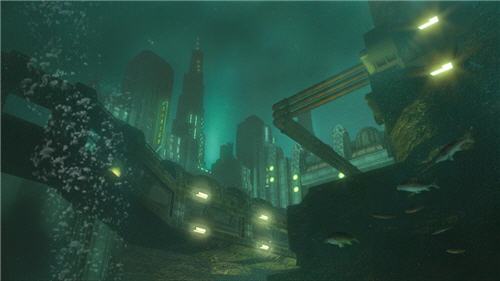
Utopia

Dystopia
Thursday, 19 November 2009
Random Key words.
Ideology - The idea of perfection within a group or persons mind
Connote - A link that the audience interprates themselves, more general than...
Denote - A direct link from the object/image.
Semiotics - Signs and meanings within society
Stereotype - Expected characteristics and type-casting
Hegemony - "A concept from Gramsci suggesting that power is achieved by dominant groups through successful struggles to persuade the subordinate that arrangements are in their interest. Using cultural power to maintain the status quo." (from http://www.heanorgate.org.uk/visualarts.asp?pageID=MediaKeywords)
Pluralistic - General and equal ownership, no particular leaders. e.g. Youtube
User Generated Content - Content added by users e.g. youtube
Iconic - Someone or something that has become an icon e.g. Martin Luther King.
Diagetic - Natural sound e.g. someones boots clicking as they walk along.
Non-Diagetic - Non-natural sound, e.g. music over the top of a scene
Moral Panic - Where a certain group or movement is over-covered and exadurated by the media, causing irrational fear.
Folk-Devils - Scapegoats
Verisimilitude - The closeness to reality of a text (remember by VerySimilarTo)
Overarching Morals - The main beleifs and social rules of a group or society
Meta/Grand narrative - A generally accepted way of life working, for example in England, education and healthcare.
Connote - A link that the audience interprates themselves, more general than...
Denote - A direct link from the object/image.
Semiotics - Signs and meanings within society
Stereotype - Expected characteristics and type-casting
Hegemony - "A concept from Gramsci suggesting that power is achieved by dominant groups through successful struggles to persuade the subordinate that arrangements are in their interest. Using cultural power to maintain the status quo." (from http://www.heanorgate.org.uk/visualarts.asp?pageID=MediaKeywords)
Pluralistic - General and equal ownership, no particular leaders. e.g. Youtube
User Generated Content - Content added by users e.g. youtube
Iconic - Someone or something that has become an icon e.g. Martin Luther King.
Diagetic - Natural sound e.g. someones boots clicking as they walk along.
Non-Diagetic - Non-natural sound, e.g. music over the top of a scene
Moral Panic - Where a certain group or movement is over-covered and exadurated by the media, causing irrational fear.
Folk-Devils - Scapegoats
Verisimilitude - The closeness to reality of a text (remember by VerySimilarTo)
Overarching Morals - The main beleifs and social rules of a group or society
Meta/Grand narrative - A generally accepted way of life working, for example in England, education and healthcare.
Michael Winterbottom Films.
I studied two very different pieces; 24 Hour Party People and Genova.
24 Hour Party People is about the development of the music culture in Manchester with narration from a music manager. A very post modern piece, due to several factors which I will go on to explain.
Genova is a film about greiving and the loss of someone important in your life. There is no narrator or particular main character as it follows two daughters and their father through a new life in Italy after their mothers death. The story dosen't have a plot realy but is more about the greivence prosess and the meta-narrative of family values.
Work in progress, need to find my notes, which are currently downstairs.
24 Hour Party People.
- Breaks fourth wall
- Talks about being post modern within the film
- Intertextual, has TV, Music
- Refers to other texts
- Nihilistic plot - does not just stick to it e.g. pigeons dieing scene (random)
Genova.
- Stedicam style camera work
- No real plot
- Hyper reality
24 Hour Party People is about the development of the music culture in Manchester with narration from a music manager. A very post modern piece, due to several factors which I will go on to explain.
Genova is a film about greiving and the loss of someone important in your life. There is no narrator or particular main character as it follows two daughters and their father through a new life in Italy after their mothers death. The story dosen't have a plot realy but is more about the greivence prosess and the meta-narrative of family values.
Work in progress, need to find my notes, which are currently downstairs.
24 Hour Party People.
- Breaks fourth wall
- Talks about being post modern within the film
- Intertextual, has TV, Music
- Refers to other texts
- Nihilistic plot - does not just stick to it e.g. pigeons dieing scene (random)
Genova.
- Stedicam style camera work
- No real plot
- Hyper reality
Stedicam style and Postmodernism.
Here for usefull source: http://en.wikipedia.org/wiki/Steadicam
The stedi-cam style of filming can be considered post modern due to the fact it is self referencial, refering back to the audience, who can easily relate to the hand-held camera style. As well as video texts using the Stedi-cam becoming hyper real, allowing the audience to gain a more personal viewpoint of the scene, for example in Genova where the camera is often folowing action, rather than the action fitting into the frame, much more like reality. Your eye follows action rather than visa versa.
The stedi-cam style of filming can be considered post modern due to the fact it is self referencial, refering back to the audience, who can easily relate to the hand-held camera style. As well as video texts using the Stedi-cam becoming hyper real, allowing the audience to gain a more personal viewpoint of the scene, for example in Genova where the camera is often folowing action, rather than the action fitting into the frame, much more like reality. Your eye follows action rather than visa versa.
Subscribe to:
Posts (Atom)